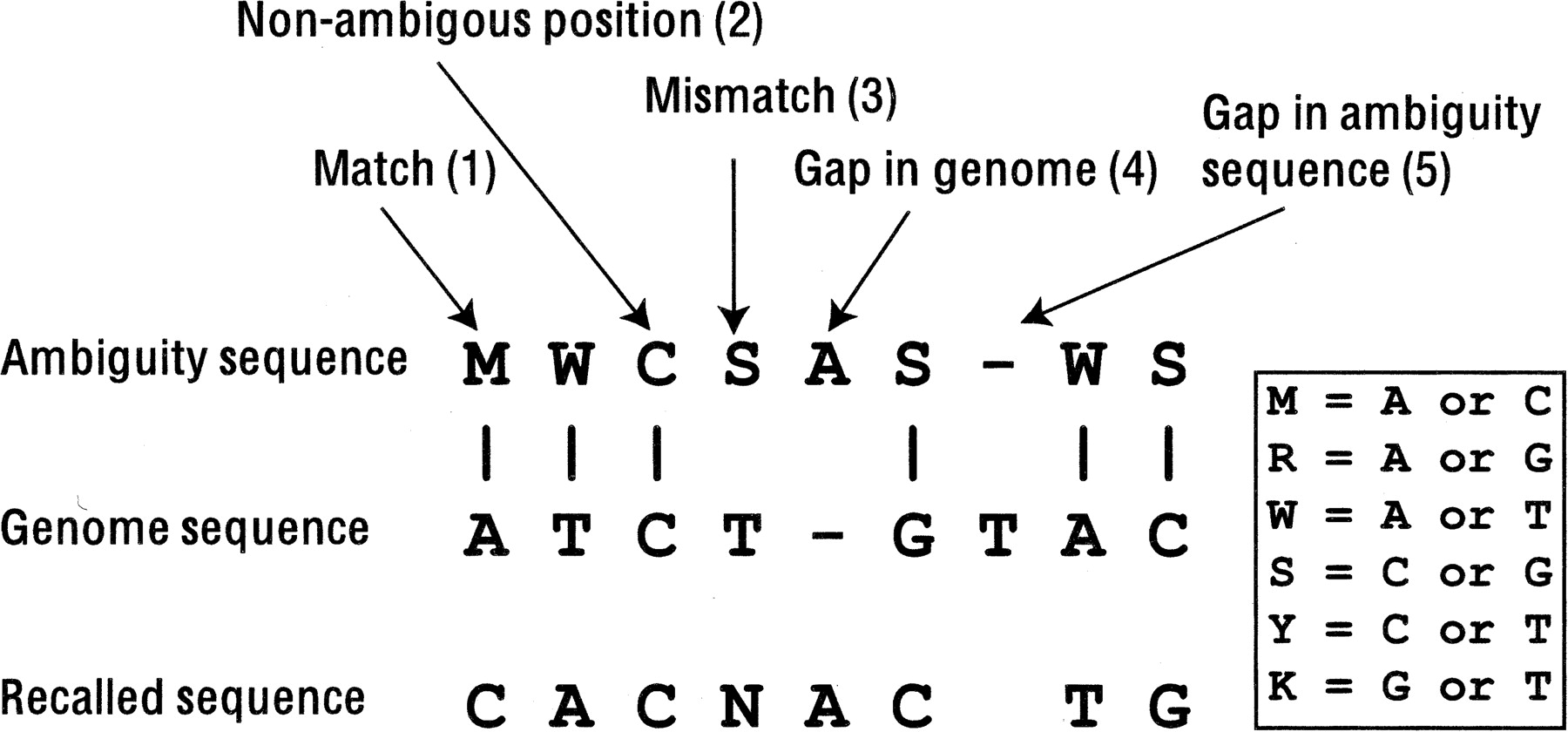
Detailed example of cases that arise in the recalling step of Trace Recalling. (1) When an ambiguity symbol from the trace matches a base from the genome, the genomic base is subtracted from the ambiguity symbol. For example, a C is called when an M in the ambiguity sequence matches an A in the genomic sequence (M = A or C) (Gibbs et al. 1990). In a good double trace, this is the most frequently seen case and represents a position where different bases were sequenced at the same position in the trace. (2) In the case of a match between two unambiguous bases, that base is called in the recalled sequence. This means that there is only one peak observed and both templates have the same base at that position. In a double trace, we expect this to happen in about a quarter of the positions. (3) When there is a mismatch, we call an N in the corresponding position of the recalled sequence. Clearly, some base is present at this position, but we have no way of knowing what it is. (4) When there is a gap in the genome sequence, the ambiguity symbol aligned to the gap is left in the recalled sequence. This case could represent an insertion in the primary template sequence with respect to the genomic sequence. (5) In the case of a gap in the ambiguity sequence, nothing is called in the recalled sequence. This could represent a deletion in the primary template with respect to the reference sequence.