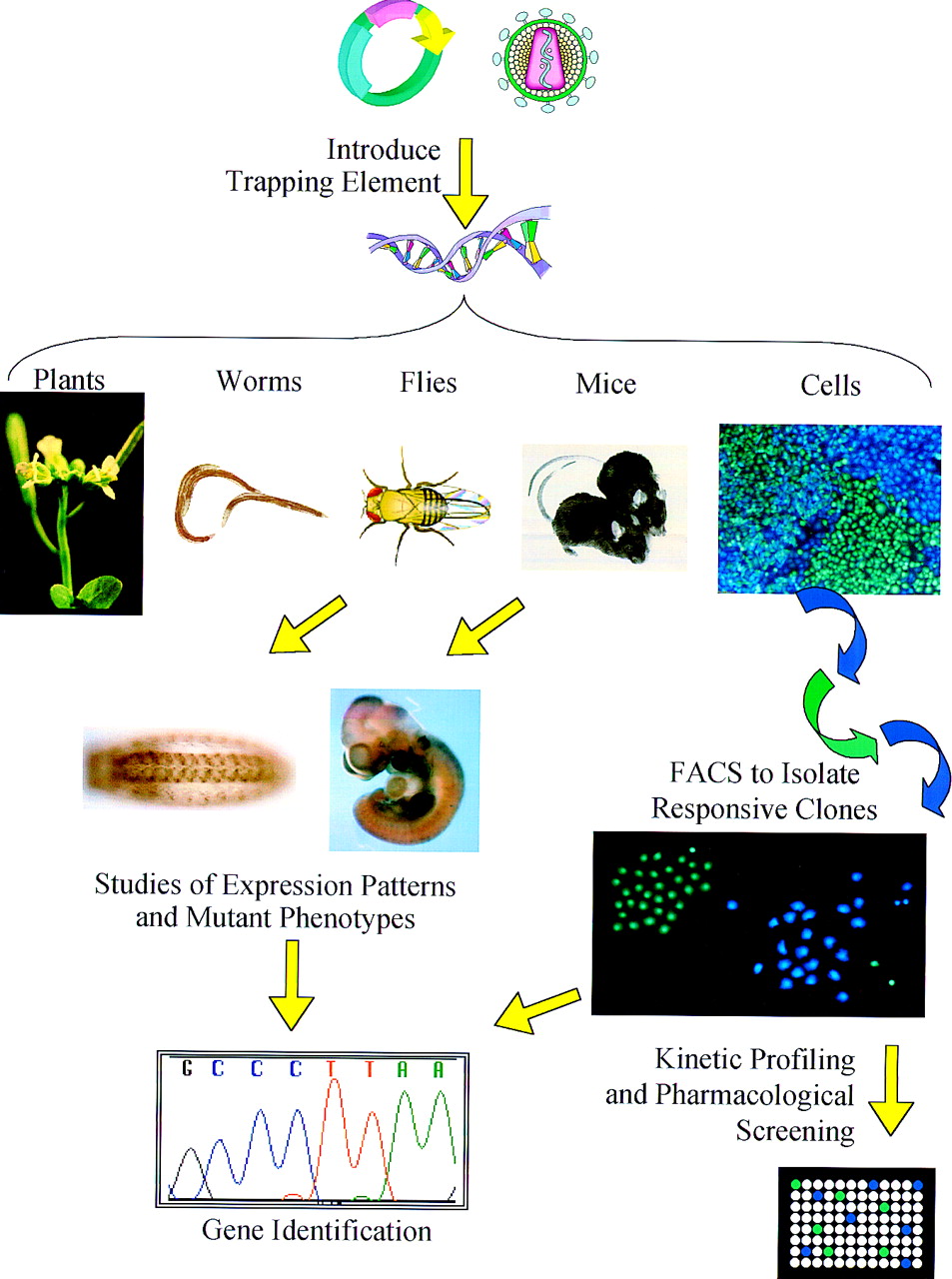
Overview of gene trapping applications. Depending on the model system, gene-trapping elements can be introduced throughout a genome using traditional plasmid vectors, transposons, or modified retroviruses. When the trapping element contains a reporter gene, the expression pattern of the tagged gene can be observed throughout the organism at various stages of development. If the tagging element disrupts the tagged gene, animals bred to homozygosity can be useful gene knockout models. The expression of tagged genes in individual cells can be monitored with the CCF2 fluorescent substrate of β-lactamase. Fluorescent activated cell sorting can be used to isolate cells in which the β-lactamase reporter gene has trapped a gene that responds to a stimulus of interest. Whether gene trapping is applied to whole organisms or individual cells, the trapping element facilitates rapid identification of the trapped gene.