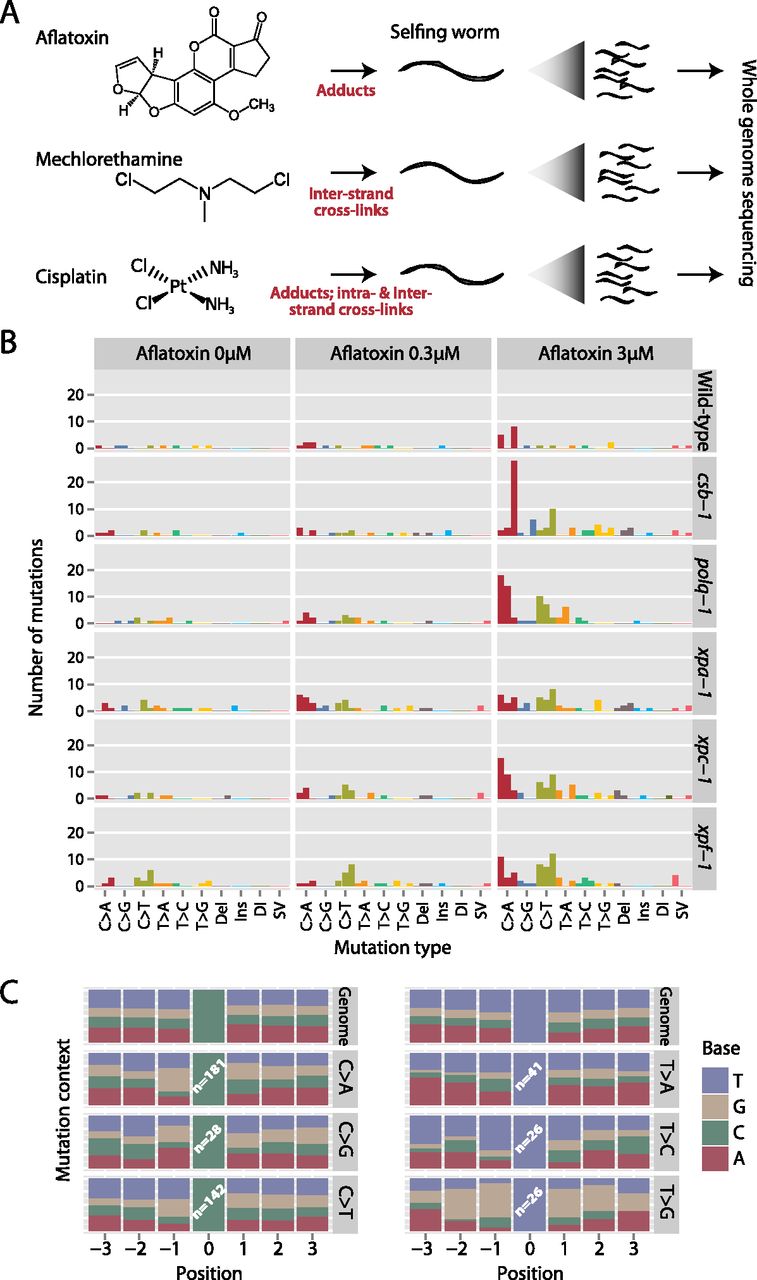
Mutations in C. elegans exposed to carcinogens. (A) The experimental design exposed a selfing animal to a specified dose of carcinogen and expanded progeny for whole-genome sequencing. The three carcinogens used were chosen because they generate different classes of DNA lesions. (B) Numbers and distribution of acquired mutations across wild-type (WT) and different genetic knockout lines exposed to different doses of aflatoxin. Each replicate worm is shown as a separate bar, colored by the class of variant. (Del) Deletion; (Ins) insertion; (DI) complex indel; (SV) structural variant. (C) Surrounding sequence context for base substitutions in animals exposed to aflatoxin. The genomic sequence from three bases upstream to three bases downstream from each observed mutation was aggregated and presented as proportions in a stacked bar chart, compared to the reference genome.