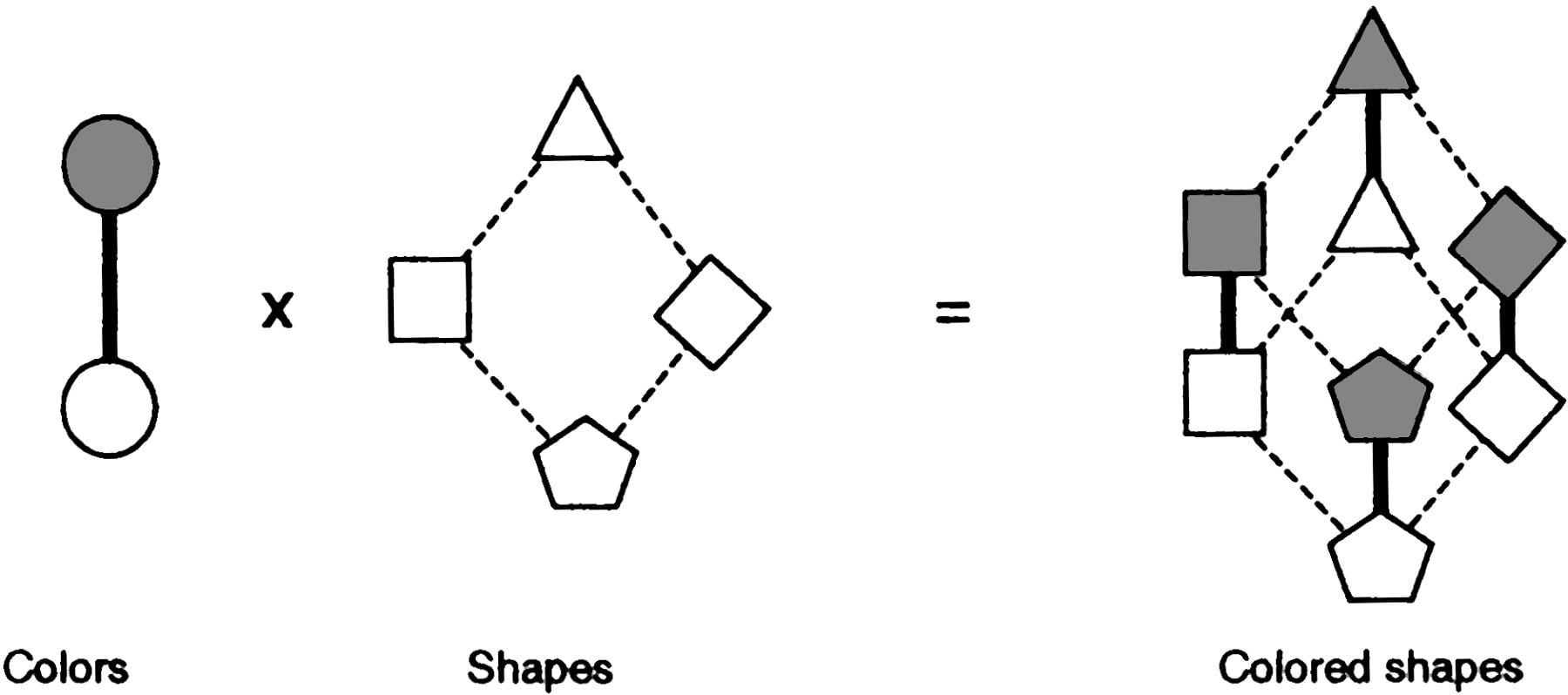
DAG cross-product example. In this example, a DAG whose nodes represent colors is crossed with a DAG whose nodes represent shapes. The result is a DAG whose nodes are colored shapes. Every combination is represented, so there are eight nodes in the result. An edge connects two nodes in the cross product whenever they have the same color and their shapes are connected in the Shape DAG (8 of these), or they have the same shape and their colors are connected in the Color DAG (4 of these). In general, the number of nodes in the cross product of DAGsA and B is the number of nodes in A times the number of nodes in B. The number of edges in the cross product is the number of edges in A times the number of nodes in B, plus the number of edges in B times the number of nodes in A.