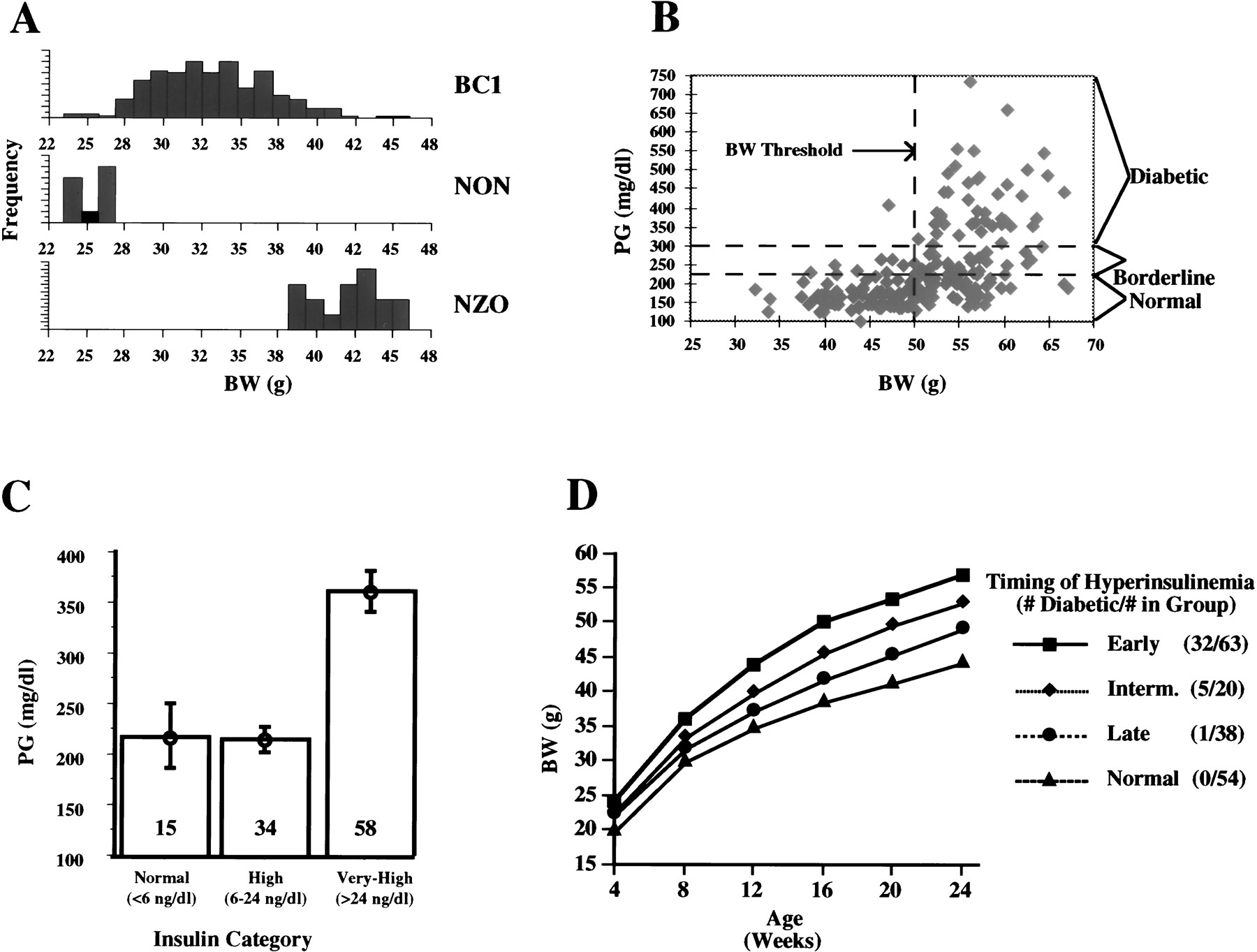
Phenotypic relationships between body weight (BW), plasma insulin, and plasma glucose (PG). (A) Markedly different BW distributions distinguish the NZO/HlLt and NON/Lt parentals, whereas the BC1 males show a continuous BW distribution between these two extremes. (B) Relationship between BW and PG in this BC1 male population at 24 weeks showing that a BW threshold exists for diabesity development, with virtually all of the diabetic males having attained a BW ≥50 g. (C) Diabetes development in mice higher than the BW threshold is associated with extreme hyperinsulinemia. Males with BW >50 g but with a normal insulin level (<6 ng/mL) or even a high insulin level (6–24 ng/m) had normal mean PGs (216 + 33, 216 + 11mg/dl respectively) whereas those with an extremely high insulin level (>24 ng/mL) had a high mean PG (360 + 16mg/dl) (P < 0.0001). (D) Relationship between early development of hyperinsulinemia with rapid prematurational rate of weight gain. Males showing hyperinsulinemia by 16 weeks of age also showed the highest rate of weight gain and the highest rate of diabetes, accounting for the majority of the diabetics in the cross by termination. In Figure 1D, 12 mice were left out of the correlation because of oscillating phenotype and 16 because of missing data at one or more time points. Standard errors in D were so small that they could not be depicted in the figure.