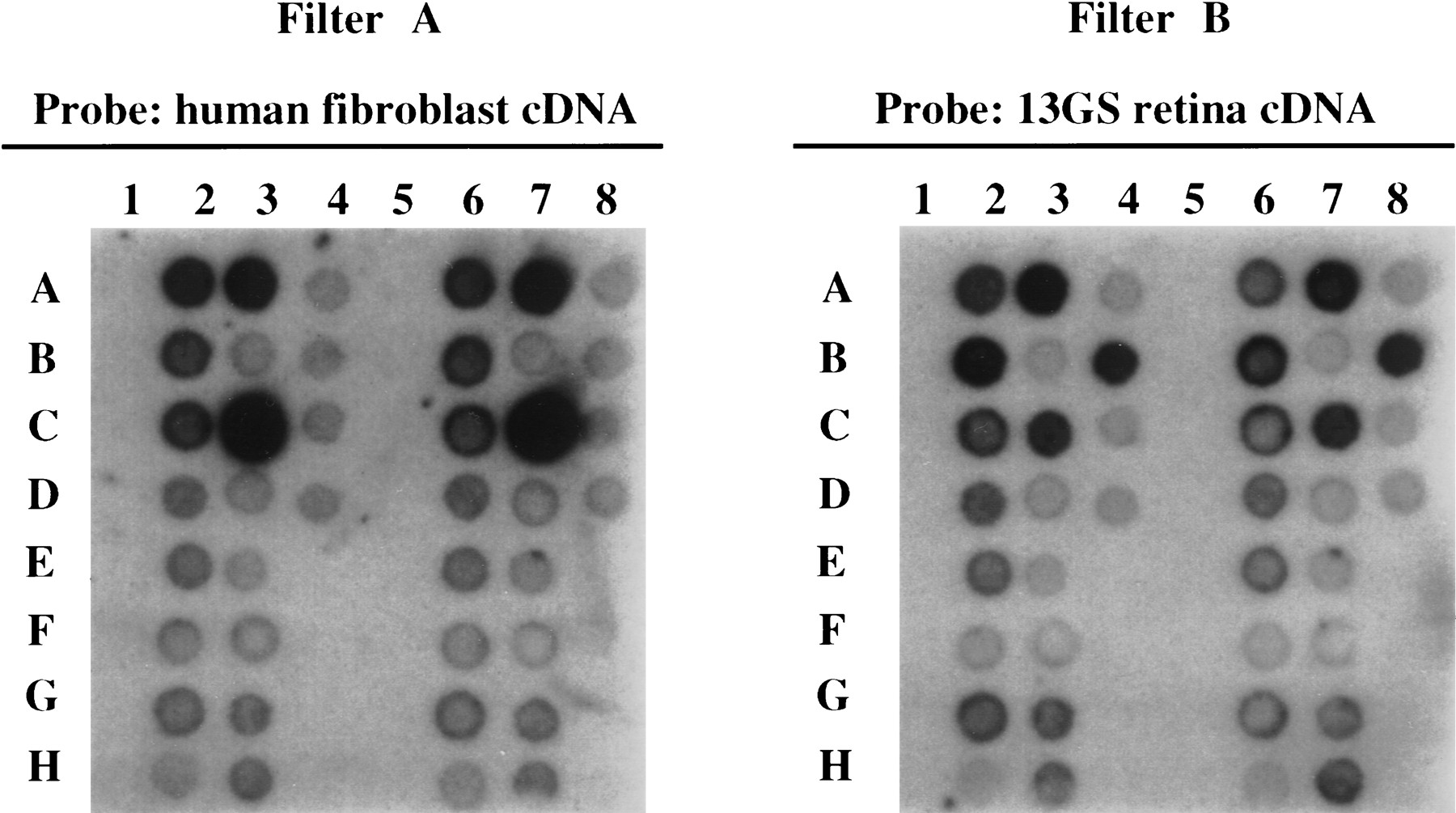
Figure 2.
Hybridization of test grids under optimal conditions. Duplicate filters with an array of control phage cDNA clones (see chart below for clone identity) were probed with human fibroblast cDNA (filter A) or 13GS retina cDNA (filter B) and washed under the conditions in which the known retinal clones give the best preferential hybridization to the 13GS probe. Recoverin (B4 and B8) exhibits the greatest intensity difference between the two probes. Optimal conditions were determined to be hybridization in 30% formamide, 1 m NaCl, 1% SDS, and 10% dextran sulfate at 42°C, washing in 2× SSC, 1% SDS, three times for 20 min at 65°C. *From E.L. Germaine-Lee, C. Obie, and D. Valle (in prep.).