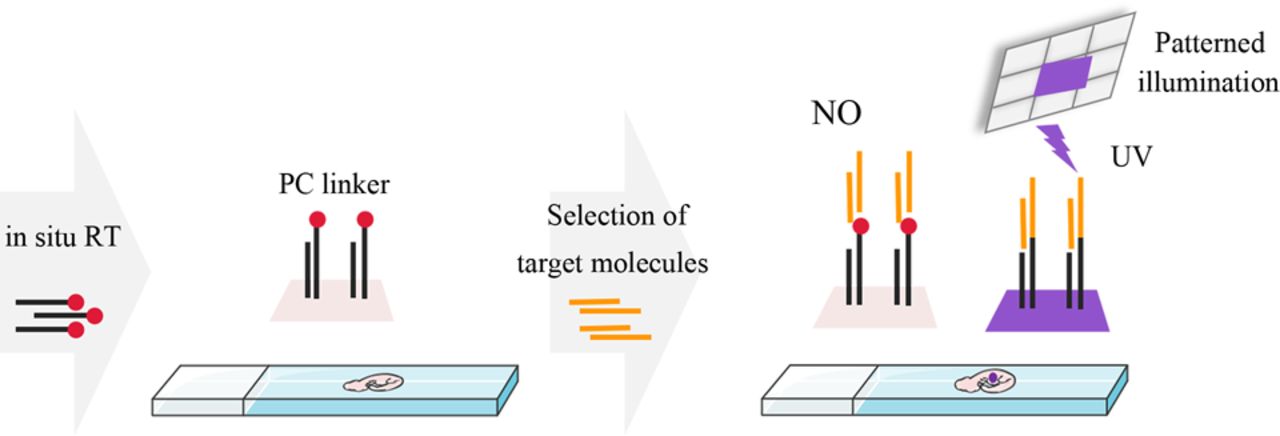
Schematic of the light-controlled DNA attachment strategy. Frozen tissue sections adhered to poly-L-lysine slides are fixed and permeabilized. An in situ RT reaction using PC linker-modified RT primers is performed to synthesize “locked” cDNA. UV light, guided by Mosaic's system, is selectively directed onto the tissue sections to illuminate specific ROIs. In the illuminated regions, the PC linkers on the newly synthesized cDNA are cleaved, allowing the subsequent ligation of adapters. This enables the cDNA in the illuminated regions to be specifically amplified using primers complementary to the adapters, resulting in the construction of ROI-specific transcription libraries. In contrast, PC linkers in the nonilluminated regions remain intact, preventing adapter ligation and inhibiting the amplification of cDNA from these areas.