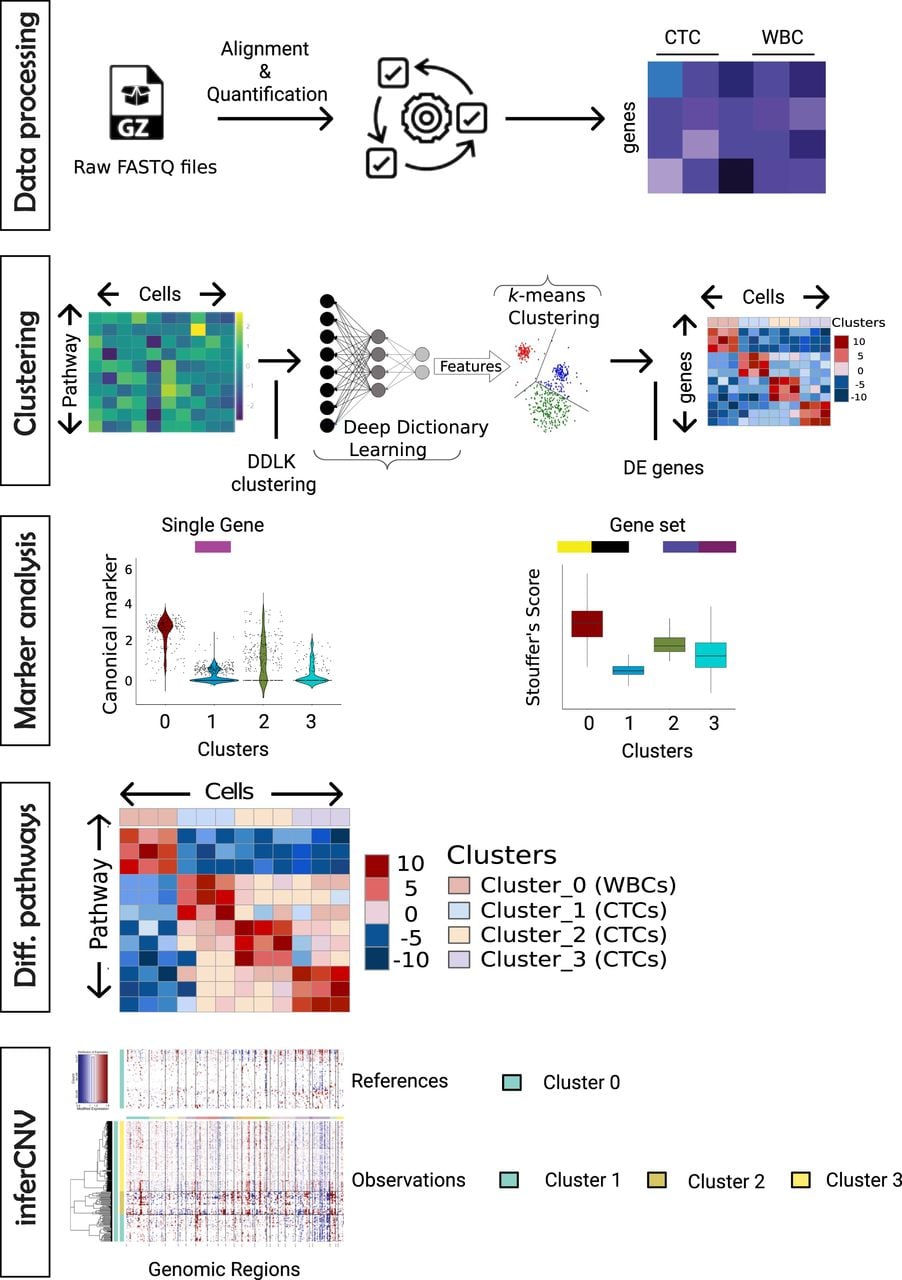
unCTC: a unified, end-to-end computational framework for marker-free characterization of CTCs. Schematic diagram depicting the analysis workflow, as well as the key methods supported by the unCTC R package. The first step involves processing raw FASTQ files to obtain the expression matrix. The novel DDLK clustering method is used to robustly cluster single CTC transcriptomes. Notably, DDLK works on pathway enrichment scores as opposed to expression values. Cluster-wise differential expression analysis is performed to gain insights into diverse CTC and WBC subtypes. Expression levels of well-known epithelial and immune markers are tracked to approximate broad cell-type identities. A similar analysis is also performed at the level of well-known gene sets/pathways. Furthermore, differential enrichment of pathway-specific genes can be analyzed to infer functional attributes. Finally, expression-based pseudo-CNV inference allows unbiased characterization of the identified clusters, thereby highlighting the malignant cells.