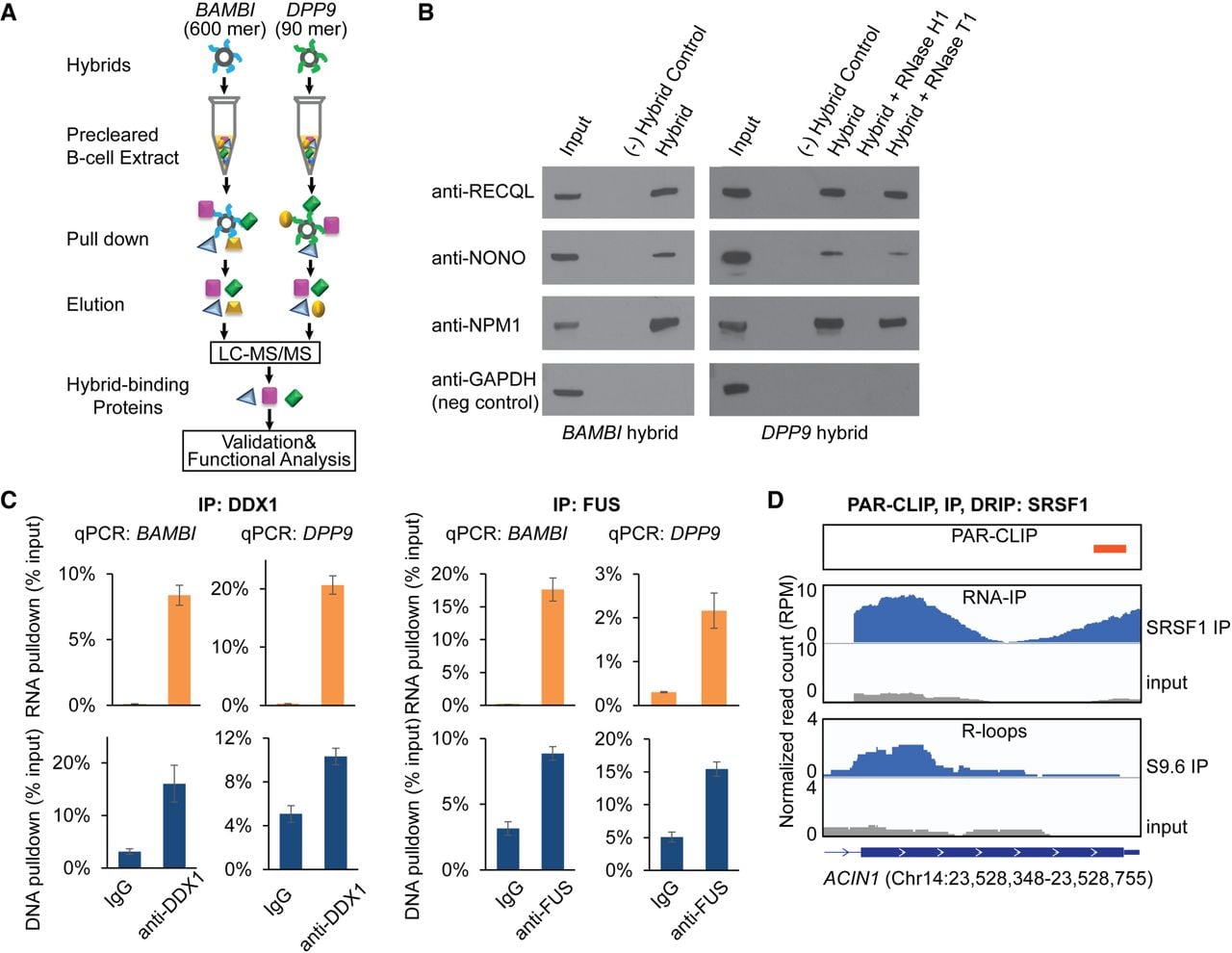
Identification of proteins that bind specifically to RNA/DNA hybrids. (A) Schematic of the experimental procedure. Biotinylated hybrids were conjugated to streptavidin beads and incubated with B-cell extracts. The proteins pulled down by hybrids were identified through proteomic analysis (LC-MS/MS). Only proteins that were bound by both hybrids were retained for further analysis. (B) Hybrid-binding proteins identified by proteomic analysis were validated by Western blot. B-cell extract (input) was incubated with no hybrid as a negative control, BAMBI or DPP9 hybrid, DPP9 hybrid pretreated with RNase H1 or RNase T1, respectively. Proteins were pulled down by biotinylated hybrids and analyzed by Western blot. Interactions with the pulled down proteins were eliminated by RNase H1 digestion but were not affected by RNase T1 digestion. (C) Validation of protein-hybrid interaction by reverse pull down. DDX1 and FUS and their associated hybrids were pulled down by anti-DDX1 and anti-FUS antibodies, respectively. RNA and DNA were purified from precipitates and quantified by qPCR using primers annealing to DPP9 or BAMBI hybrids. Input amount was normalized against copy numbers of DNA and transcripts. (Error bars) SEM of triplicates. (D) Colocalization of SRSF1 binding with R-loops. SRSF1 binding to the ACIN1 transcript was identified by PAR-CLIP and RNA-IP using an anti-SRSF1 antibody, and R-loops were identified by S9.6 DRIP. IGV viewer screenshots of data showing sequence reads from PAR-CLIP, RNA-IP, and DRIP-seq.