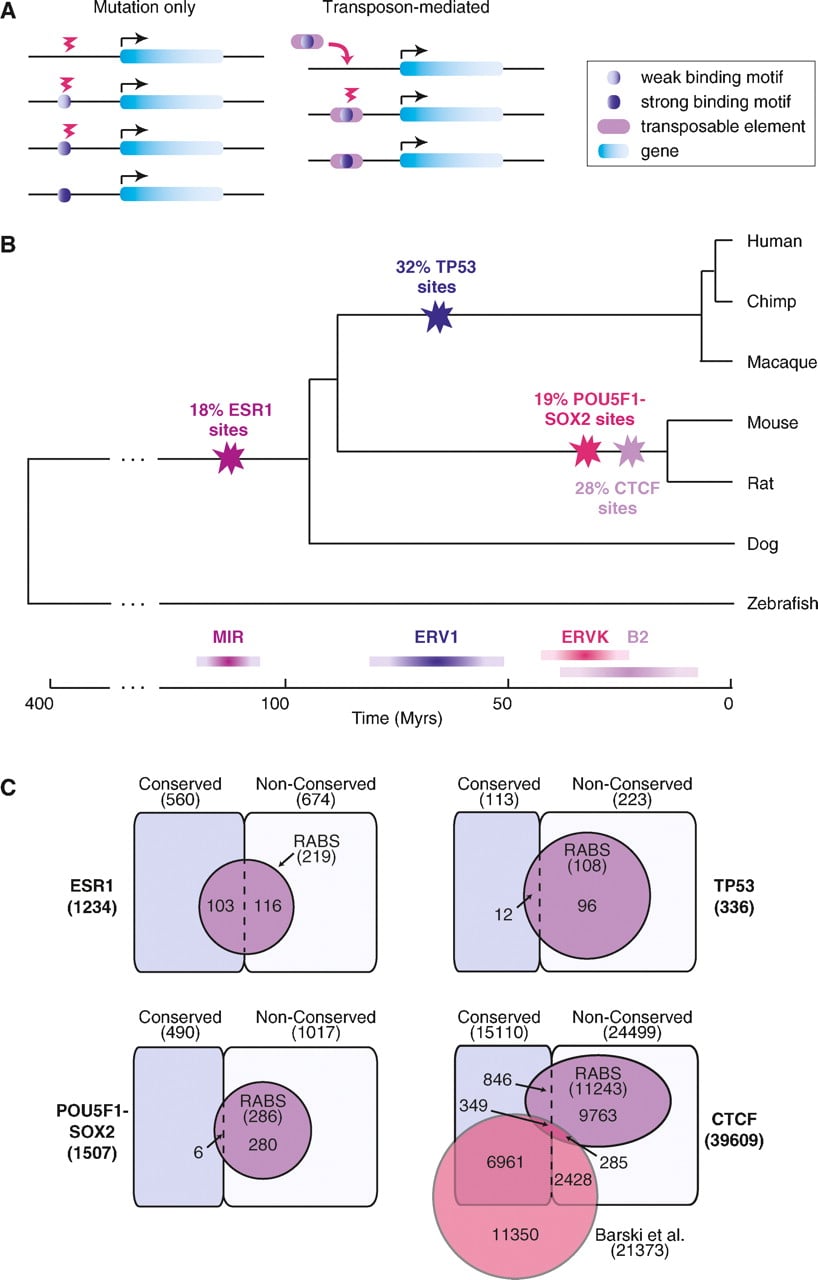
Evolution of the mammalian transcription factor binding repertoire via transposable elements. (A) Two evolutionary models for the gain of transcription factor binding sites: (1) via point mutations only or (2) by the insertion of a transposable element in which the seed of a binding motif is embedded. (B) Overlaying the age of the repeats on the species tree determines the age of the RABS. The time scale is in millions of years and divergence times are from Murphy et al. (2007). (C) RABS constitute a large fraction of the nonconserved binding regions of TP53, POU5F1-SOX2, and CTCF. Venn diagrams show the number of conserved and nonconserved binding regions that also correspond to RABS. The CTCF binding regions, which were detected in mouse embryonic stem cells, are also compared to a set of CTCF binding regions detected in human T cells (Barski et al. 2007).