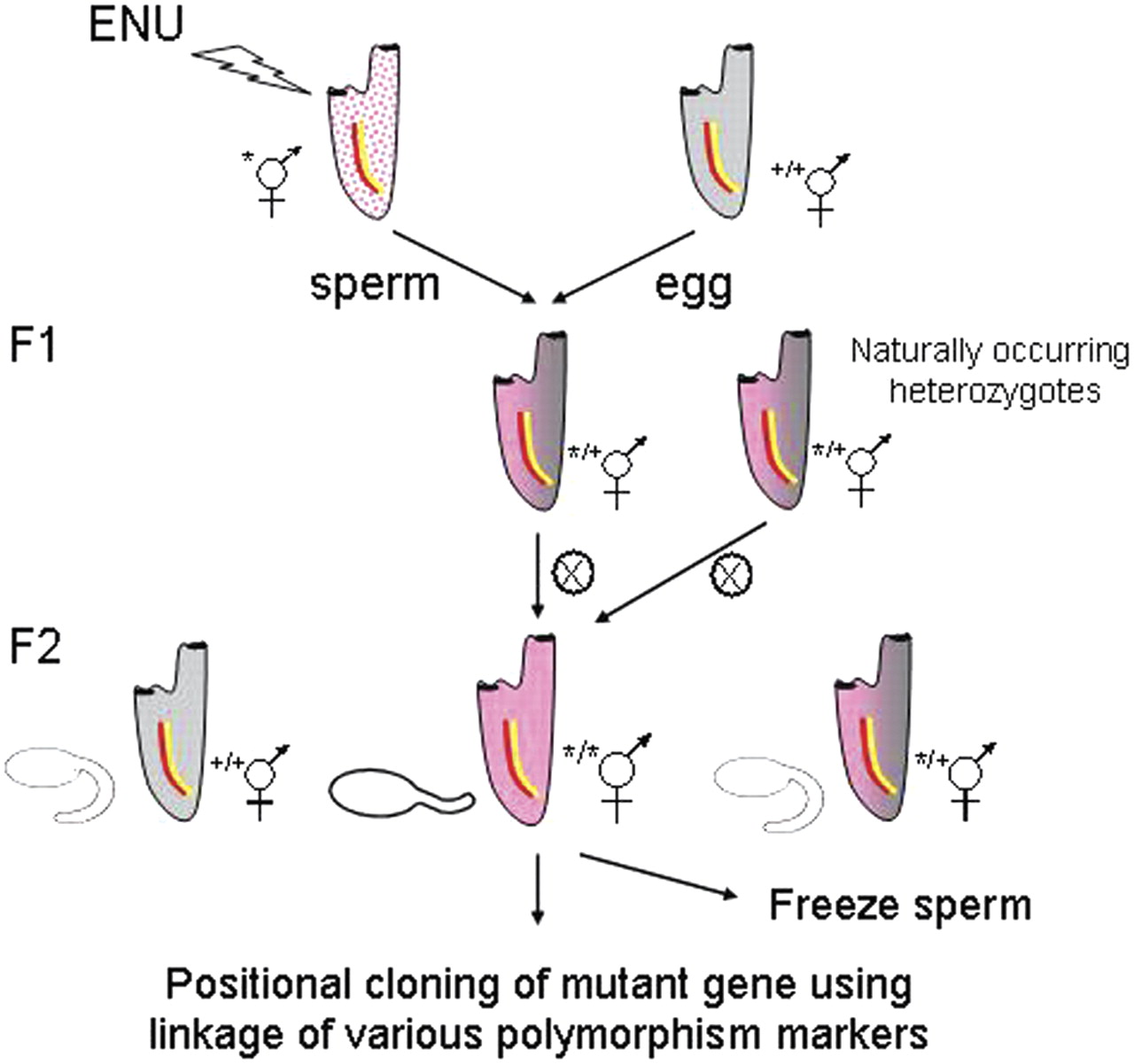
Forward genetic approach to identify recessive mutations in Ciona. Ciona mutagenesis involves a classical F2 screen (Moody et al. 1999). The F0 animals are treated with the chemical mutagen ENU and maintained for several weeks to reduce mosaicism. The mutagenized sperm is then crossed to wild-type animals to obtain heterozygous F1 progenies. The F1 animals are individually self-fertilized to produce F2 progeny that are screened for phenotypic abnormalities. The sperm of mutant lines can then be cryo-preserved for long-term storage. Alternatively, naturally occurring recessive mutations can be isolated by self-crossing single animals from the wild population. The point mutation can be determined by various mapping methods, including linkage analysis of amplified length polymorphism (Jiang et al. 2005).