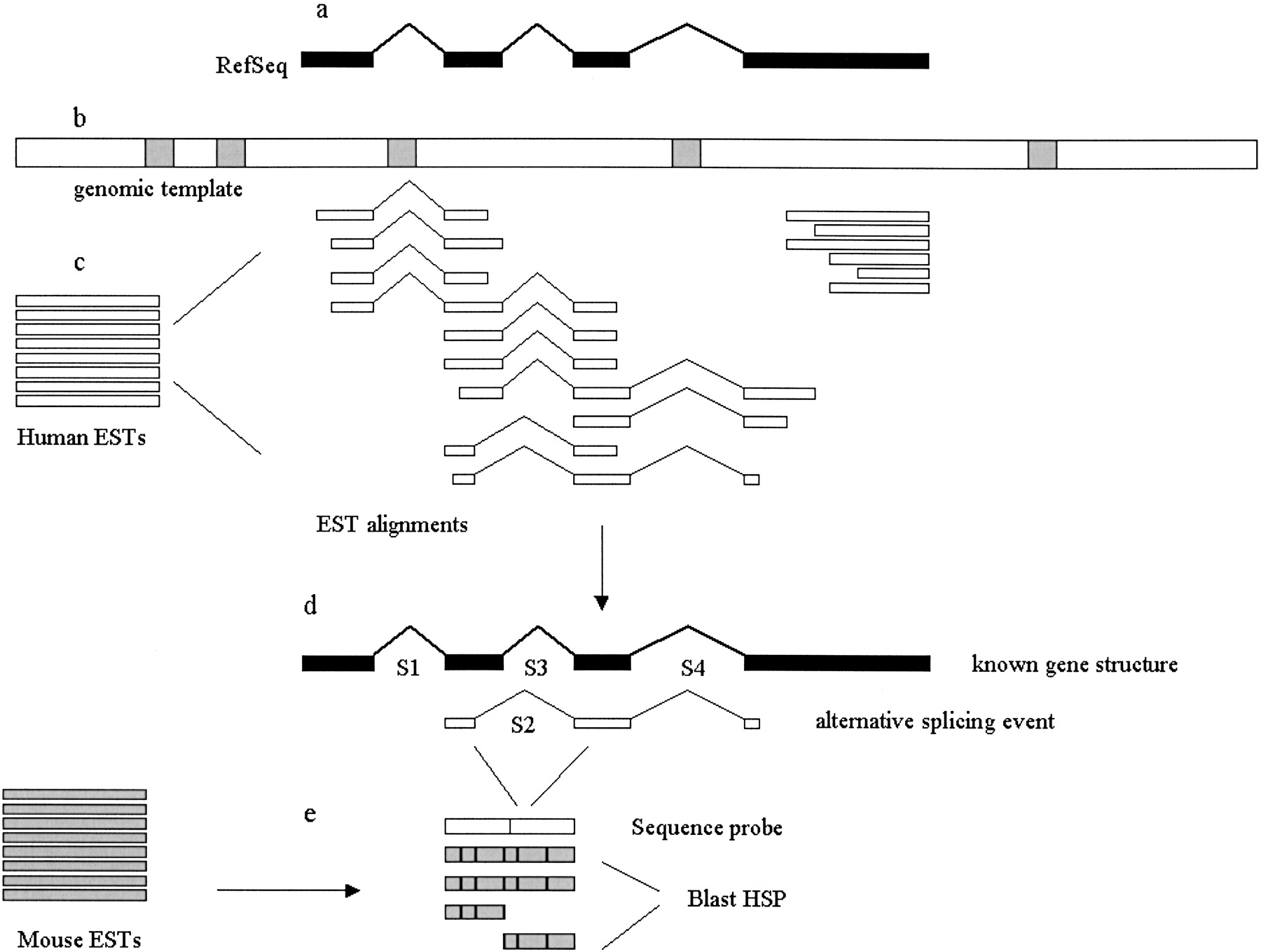
Overview of alignment procedures. (a) A known mRNA sequence was searched against the human genome contig sequences to locate a genomic template. (b) The genomic sequence was RepeatMasked and searched against dbEST. (c) High-scoring EST hits were retrieved and aligned to the genomic sequence. (d) TAP identified alternative splicing events based on a comparison of genomic EST alignments with the known gene structure. (e) All splices were searched against mouse ESTs to assess conservation. In this example, the numbers of EST observations for splices S1–S4 are, respectively, 4, 2, 4, and 3. S2 and S3 are mutually exclusive. S2 is an alternative splice because its observed frequency is lower than that of S3 (N ASP = 2, N Others = 4,N Total = 6). The others are predominant splices.