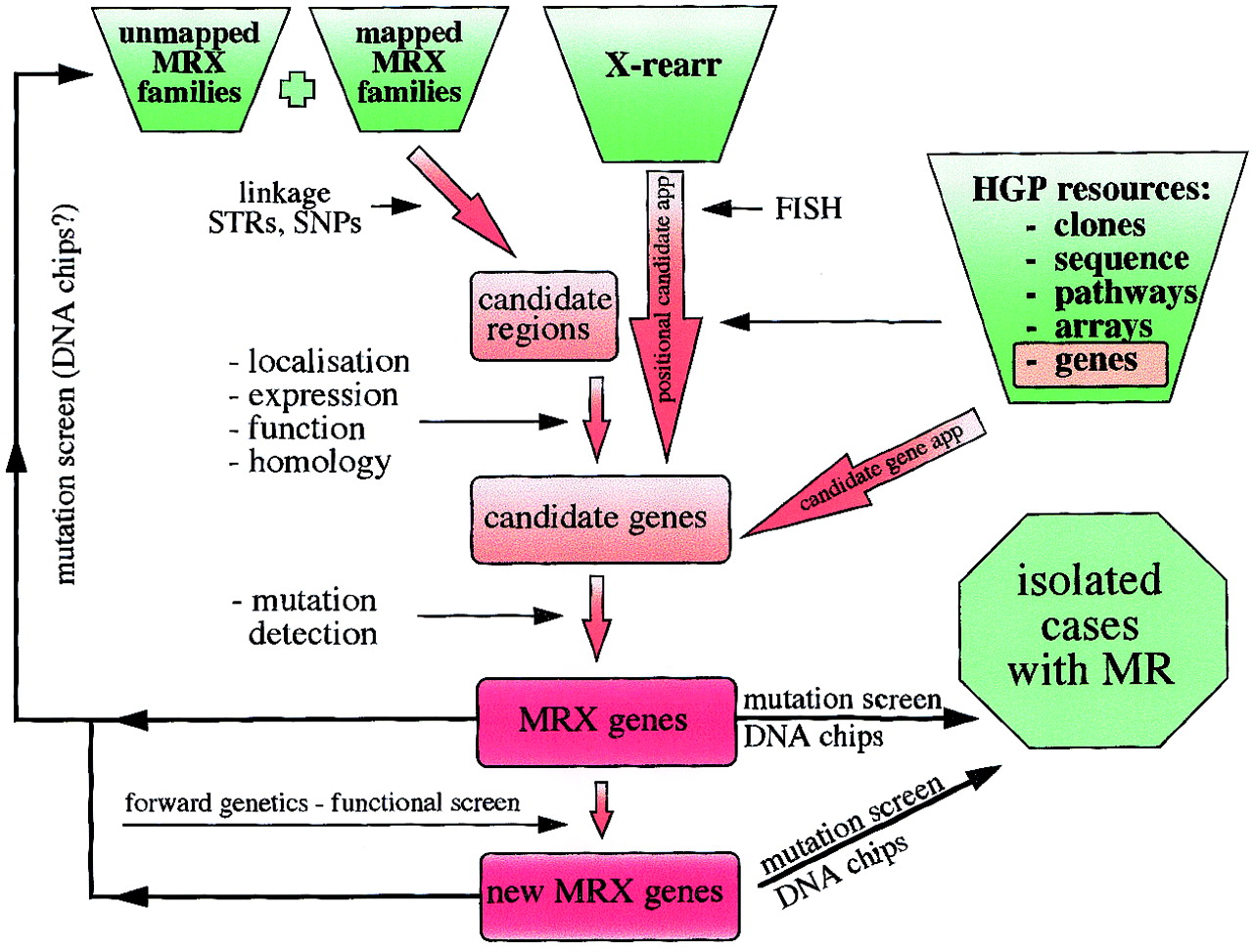
A flow diagram of the current approaches and resources available for mapping and identification of MRX genes. Currently two bags of resources are widely used, MRX families (large, lod>2, and small lod<2) and individual patients with X aberrations. Undoubtedly new technologies will play a major part in speeding up the whole process on different levels: linkage analysis (automated genotyping, SNP analysis); candidate gene characterization (based on finished or a draft human genome sequence) and expression analysis (ESTs, SAGE, cDNA microarrays); and high-throughput mutation detection technology (DNA chips for known and new mutations, direct candidate gene mutation screen). Application of forward genetics techniques (search for interacting proteins, pathways) will add yet another dimension to the scheme. With this knowledge, resources, and technologies, the identification of autosomal genes involved in aspects of cognitive function and understanding of its molecular basis will make a giant leap forward.