


Cover image
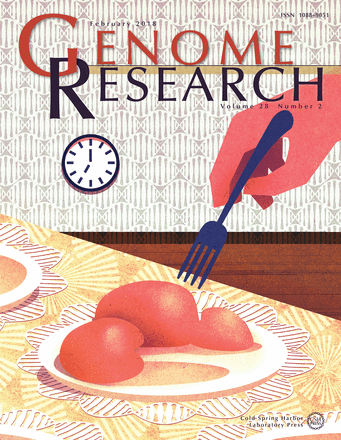
Extending analysis of tissue-specific regulation to the 24-hour day. Circadian regulation (represented by the clock) controls many physiological processes, notably feeding-fasting behavior, lipid metabolism, and sodium homeostasis. Round plates represent a novel quantitative method (complex-valued singular-value decomposition) to identify modules of gene expression that oscillate in different subsets of tissues. DNA is looped around each plate, highlighting the role of tissue-specific chromatin interactions in regulating these modules. (Cover illustration by Scott Uminga, www.scottuminga.com. [For details, see Yeung et al., pp. 182–191.])

